
If you're a restaurant operator in the UAE and your delivery numbers feel worse than previous Ramadans, you're not imagining it and you're not alone.
Every year, Ramadan brings a predictable seasonal dip in food delivery orders. It's expected, manageable, and something operators plan for. But this year, something else is happening on top of that seasonal pattern. And the data makes it hard to ignore.
What the data is actually showing
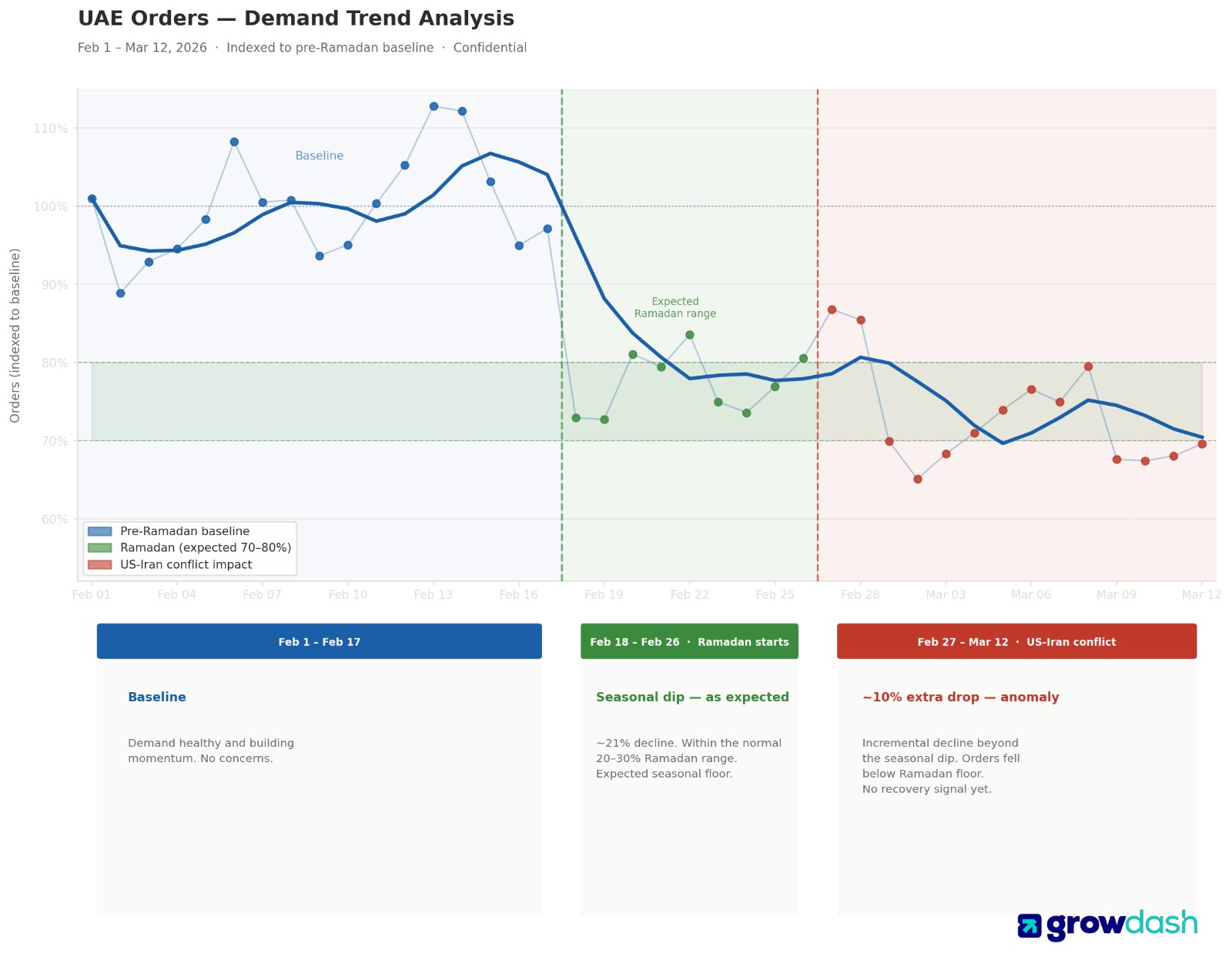
At Growdash, we track order volume in real-time across our restaurant partners in the UAE. Here is what we observed between February 1 and March 12, 2026, indexed against the pre-Ramadan baseline:
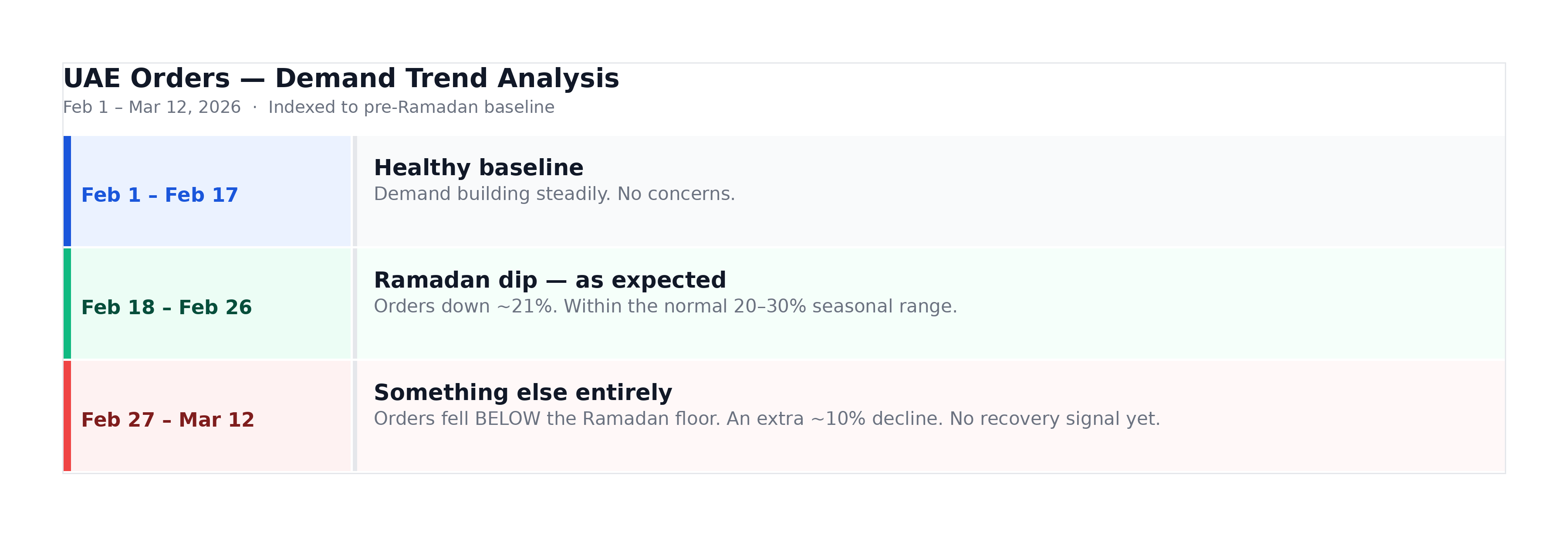
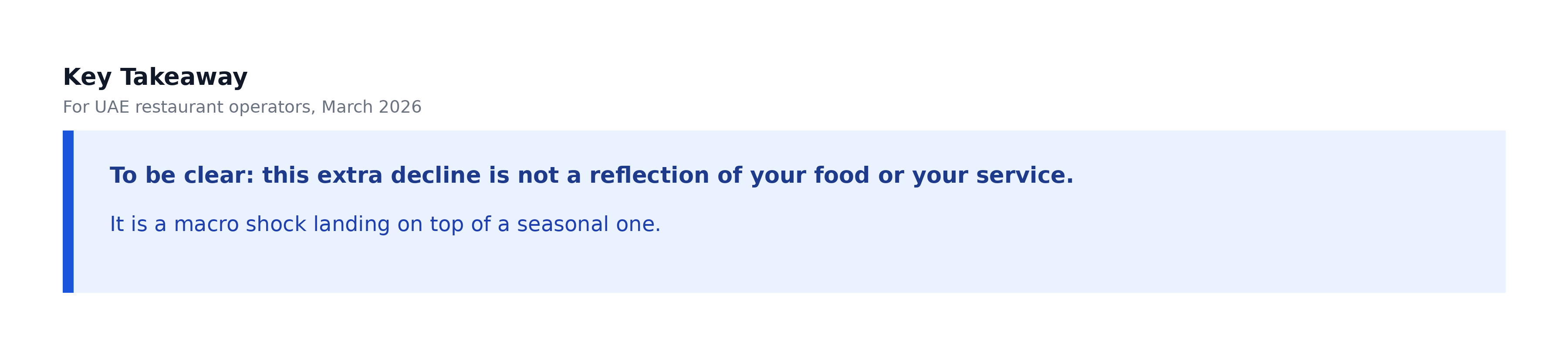
That third phase is the anomaly. The drop coincides exactly with the escalation of the US–Iran situation. Consumer confidence dips during geopolitical uncertainty and the effects are visible in the numbers: people spend less, order less, go out less, residents travel abroad, and tourism softens.
The good news
Demand shocks like this are temporary. History shows that consumer confidence recovers, and when it does, delivery orders follow. The operators who will lead that recovery are the ones who manage the next few weeks intelligently; not reactively.
What to do right now
Here are four things we'd recommend to any operator navigating this period:
1. Don't panic-discount. Cutting prices to chase shrinking volume is tempting but it destroys margin and trains customers to wait for deals. Instead, create genuine value. Think combo meals built around real occasions: bundles for singles, couples, and families are a smart way to protect average order value while giving customers a reason to order.
2. Tighten your menu. Now is not the time to run with a bloated menu. Identify your top revenue-driving items; the dishes with the best margin, the best ratings, and the strongest conversion and make sure they are front and centre on every aggregator platform. Simplicity in the kitchen also helps with speed, which matters during a period when every order counts.
3. Stay visible. It is counterintuitive to keep marketing spend up when demand is down, but pulling back completely is a mistake. Your competitors may do exactly that. The operators who stay visible now will own the recovery; they'll have stronger brand recall and better platform rankings when volume returns.
4. Use your data. If you don't have clear visibility into which channels, time slots, and menu items are still performing during this period, that's the first problem to solve. Decisions made without data in a demand shock cost you more than the shock itself. You need to know exactly where to protect margin and where to keep spending.
How Growdash can help
This is exactly the kind of situation Growdash was built for. We give restaurant operators in the UAE real-time visibility into their delivery performance across Talabat, Deliveroo, Careem, Noon, and more; so you can see what's working, what isn't, and where the opportunity is, even in a difficult market.